
Sandstone remains one of the most sought‑after materials for retaining walls and structural landscaping across Brisbane, Ipswich and South East Queensland. Its natural, timeless appearance, combined with its cost‑effectiveness compared to many modern retaining wall materials, has made it a popular choice for both residential and commercial projects.
However, with that popularity comes complexity. Sandstone availability can fluctuate, block sizes and colours vary by quarry, and supply delays are not uncommon. Understanding how the sandstone industry works helps set realistic expectations and leads to better project outcomes.
This article explains how sandstone is supplied in South East Queensland, outlines the main quarry sources, and highlights why working with an experienced contractor can simplify the entire process.
Why sandstone is in such high demand
Sandstone has remained popular in Queensland for two key reasons:
1. A timeless, high‑end appearance
Sandstone creates a classy, natural and enduring finish that suits both traditional and contemporary designs. Unlike manufactured products, sandstone weathers naturally over time, often enhancing its appearance rather than detracting from it.
2. Cost‑effective compared to many alternatives
In today’s market, sandstone is often more affordable than many engineered retaining wall systems, particularly when considering material costs, longevity and visual appeal. This makes it an attractive option for larger retaining walls where both structure and aesthetics matter.
Because sandstone offers both visual appeal and value, demand across South East Queensland remains consistently high.
How the sandstone industry works in South East Queensland
Sandstone used for retaining walls in Queensland generally reaches customers through one of two channels:
Quarry‑direct supply
Some quarries sell directly to builders or end users. While this provides access to stone straight from the source, it also means you are limited to that quarry’s block sizes, colours and cutting methods.
Agents and landscaping suppliers
Many sandstone blocks are supplied through third‑party agents or landscaping suppliers. These businesses are not the quarry itself — they act as intermediaries, sourcing sandstone from multiple quarries depending on availability, grade and size at the time.
When demand is high, some quarries may:
- Prioritise long‑term trade customers
- Supply only through established agents
- Temporarily stop selling directly to the public
This is not unusual in the industry and is generally a response to stock limitations rather than pricing or preference.
Why sandstone supply delays can occur
Sandstone is a natural product, and quarrying it is not a continuous, guaranteed process. Supply interruptions can occur for several reasons:
High demand
Because sandstone is so popular across SEQ, quarries can experience periods where demand exceeds available stock, leading to longer lead times or restricted supply.
Natural rock grading standards
Quarries work to specific rock quality and grading standards. If a quarry encounters a section of rock that does not meet those standards — due to fractures, inconsistency or other geological factors — production may need to slow or stop while that section is worked through.
This can temporarily affect:
- Block availability
- Specific sizes
- Certain grades
These pauses are a normal part of quarry operations and are necessary to maintain consistent product standards.
The main sandstone quarries supplying South East Queensland
While sandstone is sourced from several areas, the majority of sandstone retaining wall blocks used in SEQ come from a small number of key quarry regions.

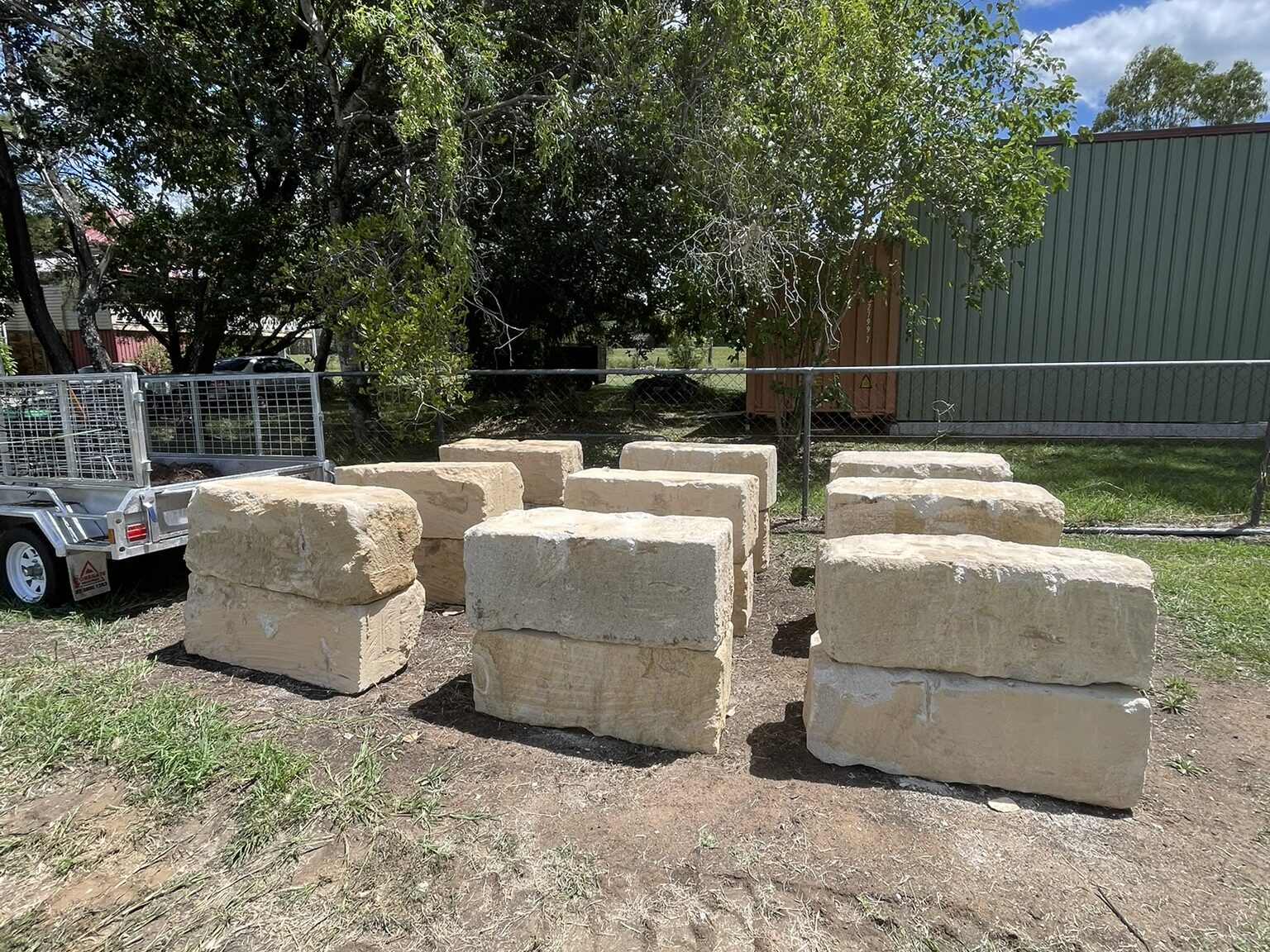
Warwick Quarry (Southern Downs)
Sandstone from the Warwick region is widely used throughout South East Queensland and is known for supplying a broad range of structural block sizes.
Typical block sizes produced:
- 600 × 600 × 1000 mm
- 500 × 500 × 1000 mm
- 400 × 400 × 1000 mm
The 400‑series blocks are less commonly produced across the region and are typically associated with Warwick‑sourced sandstone, making them particularly useful where access or wall design requires smaller block sizes.
Typical colour range:
- Orange/ Beige
- Orange/ Beige/ Grey
As with all natural stone, colour variation within these ranges is normal and expected.
Gosford Quarry – Beaudesert region
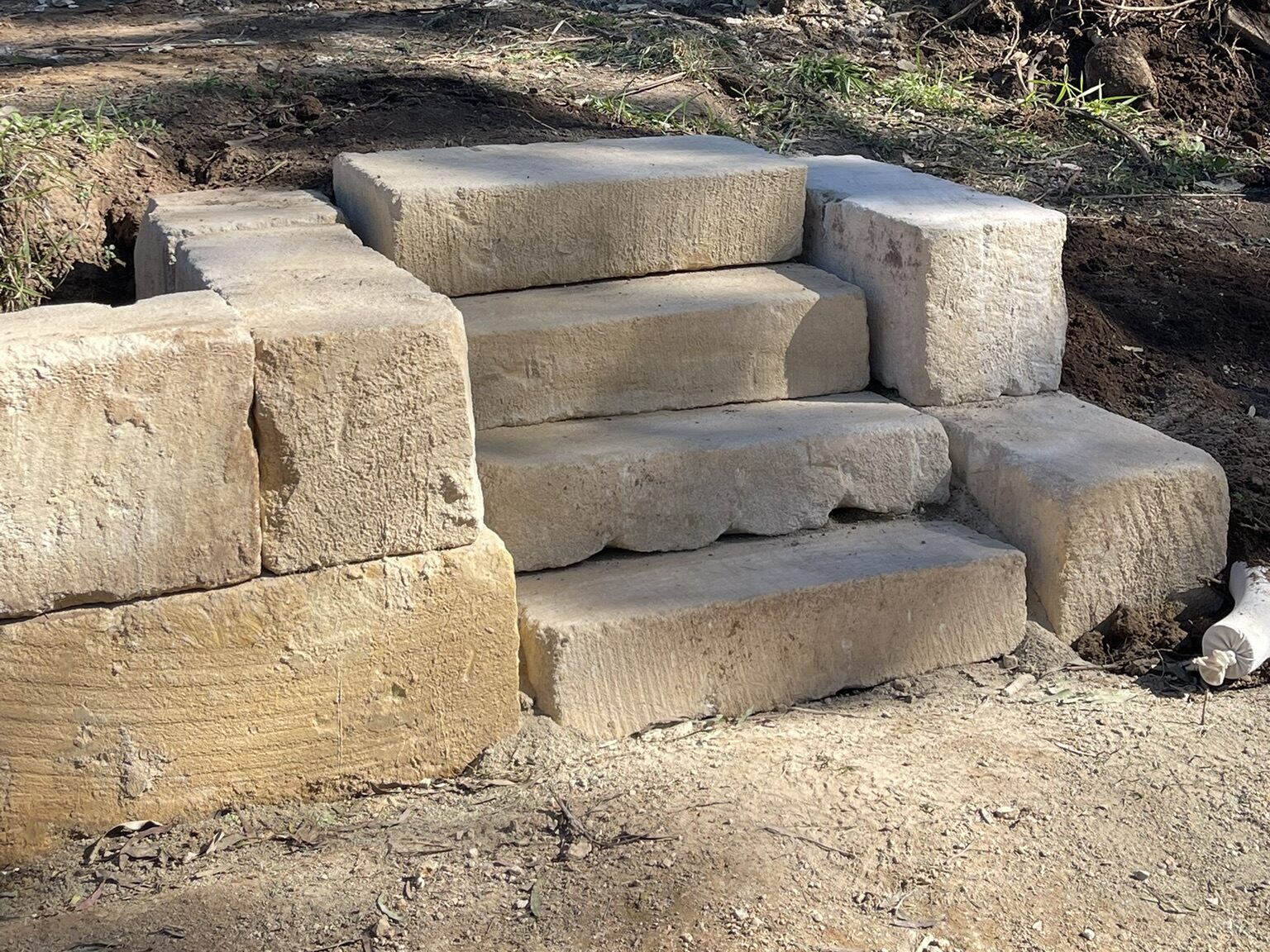
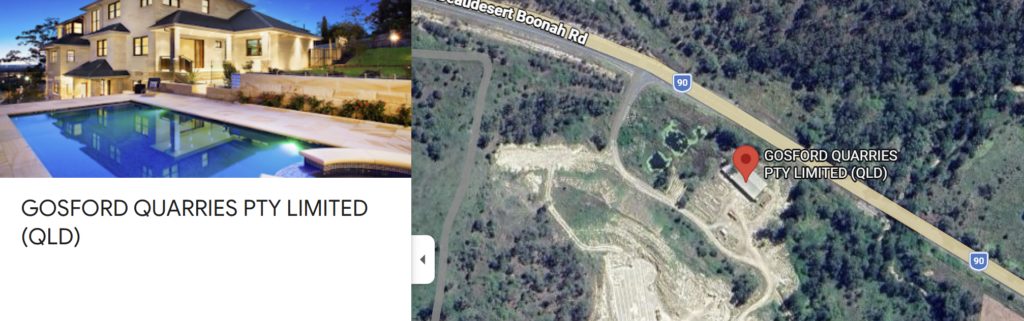
The Gosford Quarry in the Beaudesert area supplies a more standardised range of sandstone blocks commonly used in residential retaining walls.
Typical block sizes produced:
- 600 × 600 × 1000 mm (A Grade and B Grade)
- 500 × 500 × 1000 mm (A Grade and B Grade)
- 300 × 300 × 1000 mm (recently introduced)
The addition of the 300‑series blocks provides greater flexibility for lower walls, garden edging and areas with restricted access.
Typical colour range:
- Brown
- White to grey tones
These neutral colours are popular for modern landscaping and architectural designs.

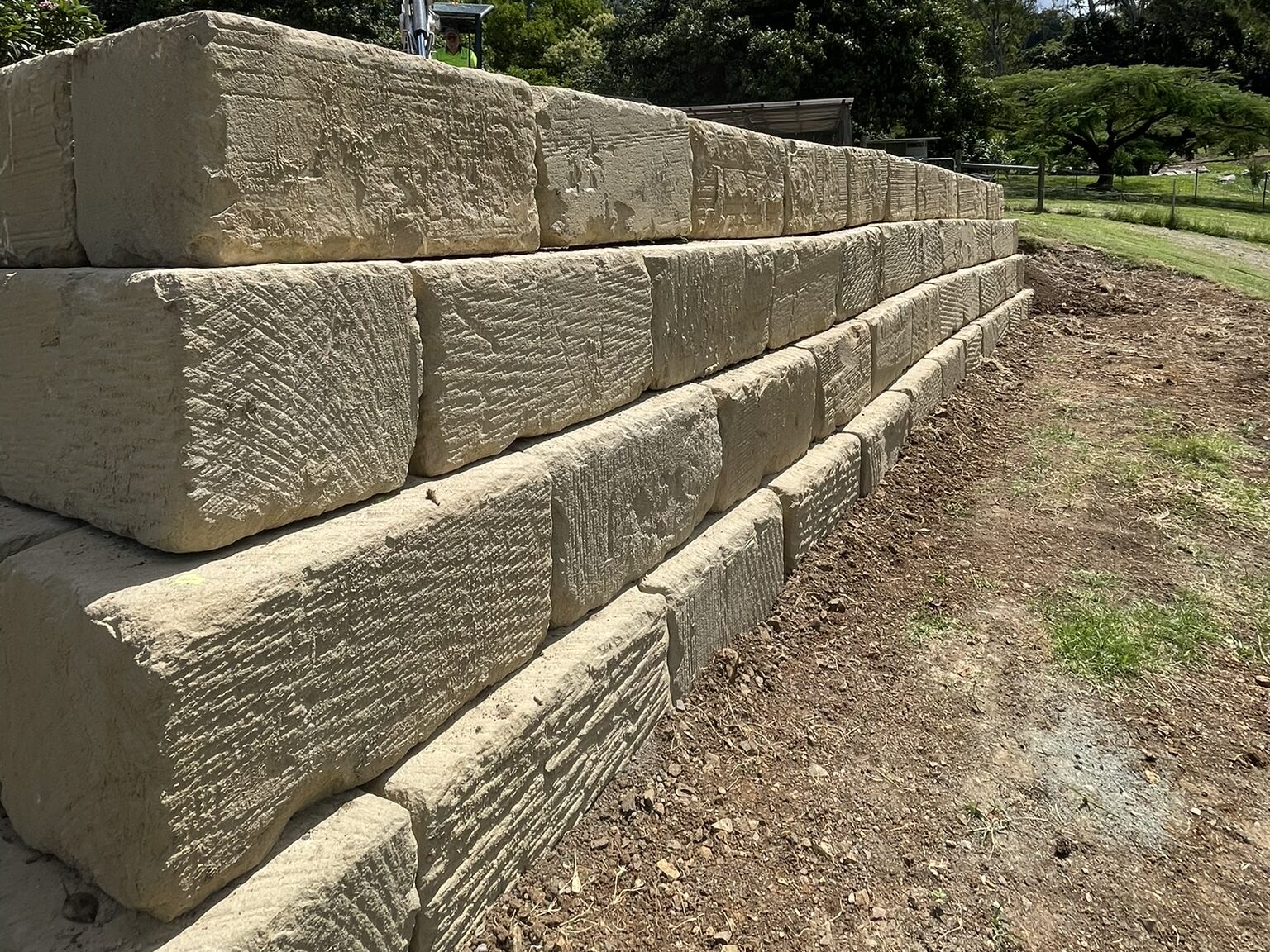

Helidon sandstone (Lockyer Valley)
Helidon sandstone is one of Queensland’s most established sandstone sources and is distinct due to its premium cutting methods.
In addition to standard A Grade and B Grade blocks, Helidon produces an A Premium range, which includes:
- Diamond‑cut A Premium blocks
- Diamond‑cut steps
- Random blocky boulders
This differs from:
- Standard A Grade blocks produced by other quarries
- Rough‑sawn or wheel‑sawn steps commonly supplied elsewhere
The diamond‑cut process produces a more refined, consistent finish and is often selected for feature walls, steps, seating and architectural elements.

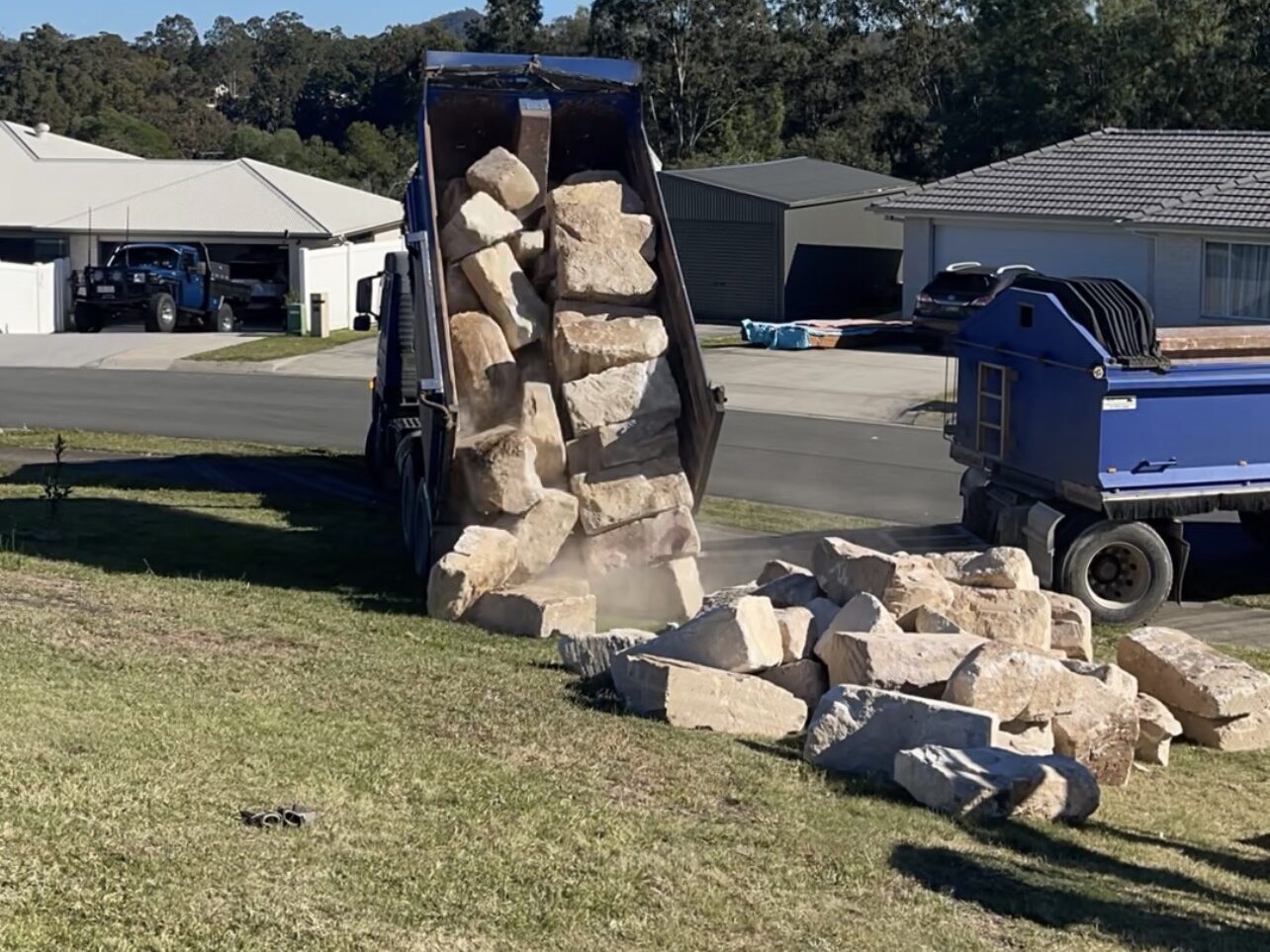
Understanding sandstone grades for retaining walls
Sandstone grades relate to consistency of size and finish, not strength.
- A Grade – More uniform blocks with more sawn faces
- B Grade – Greater natural variation, more rustic appearance
- B Premium (or Select) – Improved consistency over standard B Grade while retaining natural character.
B Grade sandstone blocks are created as a natural by‑product of cutting A Grade blocks. When a quarry slices stone to produce A Grade blocks, any pieces that fall outside the strict size, shape, or uniformity requirements are reclassified as B+, B, or even C Grade. These blocks are still structurally sound sandstone—they just have more natural variation, giving them a more rustic and organic appearance.
Most commonly used grade
For retaining walls in South East Queensland, B Grade or B Premium sandstone is the most commonly used. These grades strike a balance between cost, structural suitability and natural appearance, making them ideal for most residential and structural applications.
Why sourcing sandstone can be challenging for homeowners
Choosing sandstone isn’t just about picking a colour. The final outcome depends on:
- Quarry availability at the time of ordering
- Block size and grade availability
- Natural colour variation between batches
- Quarry production pauses due to rock quality
- Transport logistics and site access
Without experience, it’s easy to encounter delays, mismatched stone or unsuitable block selections.
How Rycan simplifies sandstone sourcing
At Rycan Retaining and Earthworks, we are not tied to a single quarry or supplier. We source sandstone across Warwick, Gosford (Beaudesert), Helidon and other South East Queensland supply channels, depending on availability and project requirements.
For our clients, this means:
- Access to all major sandstone types and sizes in the region
- The correct grade selection for retaining wall performance
- Colour ranges suited to the property and design
- No need to deal with quarry restrictions, agents or supply delays
- One point of responsibility from sourcing through to installation
We manage the complexities behind the scenes, so your project stays on track.
Final thoughts
Sandstone’s popularity in South East Queensland is well earned — it offers a timeless look, long‑term durability and excellent value compared to many modern retaining wall materials. However, its popularity also means supply can fluctuate, and sourcing the right stone requires experience.
Understanding how sandstone is quarried, graded and supplied helps set realistic expectations. Working with an experienced contractor ensures those expectations are met — without unnecessary delays or complications.
If you’re planning a sandstone retaining wall or structural landscape project in Brisbane, Ipswich or surrounding areas, Rycan Retaining and Earthworks can guide you through the process and manage the sourcing for you. Click here to Contact Us today!