
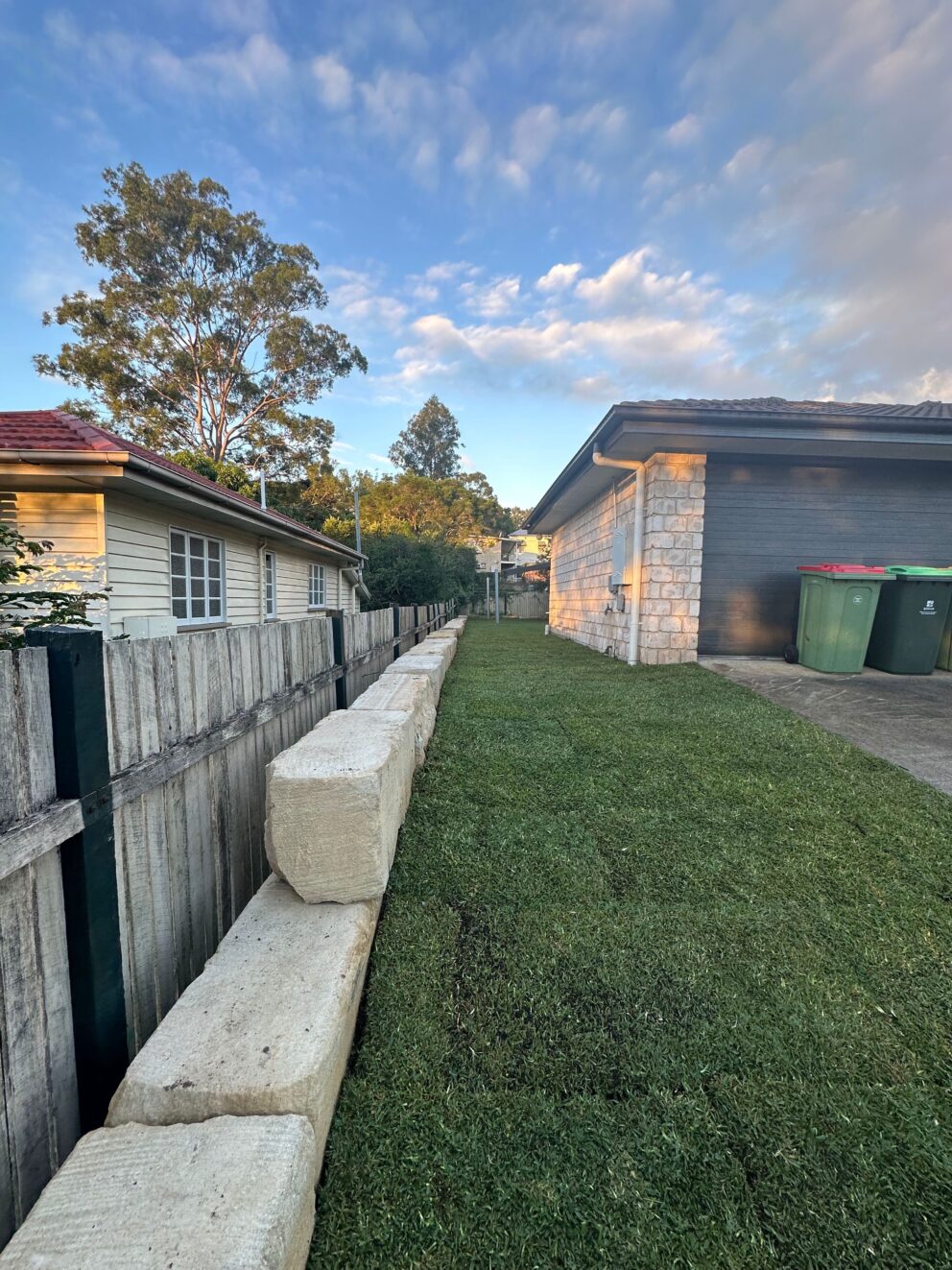
When planning a retaining wall or major landscaping project, most homeowners focus on how it will look — the stone selection, the layout, and how it will transform their outdoor space.
What’s often overlooked, however, is one of the most important parts of the entire construction: drainage.
At Rycan Retaining and Earthworks, we regularly see issues caused not by poor materials or workmanship, but by water not being managed correctly. Understanding why drainage matters can help protect your retaining wall, your landscaping, and your investment for years to come.
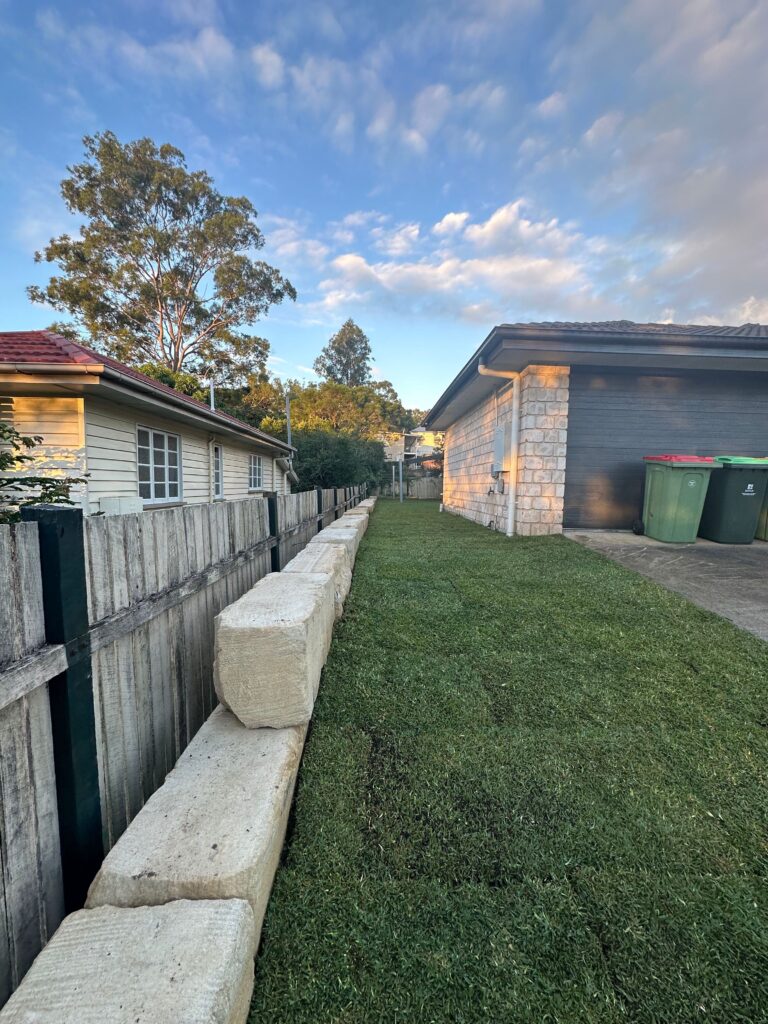
Retaining Walls Are Designed to Hold Soil — Not Water
Every retaining wall, regardless of how well it’s built, is affected by water.
Rainfall, irrigation, and natural groundwater movement all contribute to water building up behind a wall. If that water isn’t properly managed, it will eventually find the path of least resistance — often in places you don’t want it.
Without suitable drainage, excess water can:
- Build up pressure behind the wall
- Force its way through joints or along stone layers
- Flow over the face of the wall and through garden beds
Over time, this can affect both the appearance of the wall and its long‑term performance.
How Clay and Rock Soils Affect Water Movement
In many areas across South East Queensland, particularly Brisbane’s western suburbs, soil conditions typically consist of clay‑based soils combined with underlying rock or rock shelves.
Clay soils drain slowly and retain moisture, allowing water to build up behind retaining walls. Rock layers beneath the soil behave differently — once water pressure increases, water can move quickly along cracks, seams, and rock faces.
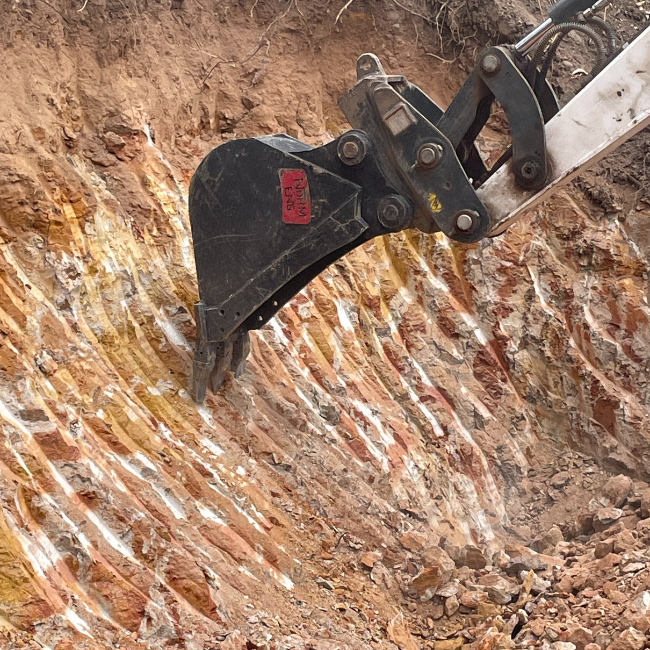
This combination often leads to:
- Sudden water movement during heavy rainfall
- Water exiting at specific points rather than evenly
- Unpredictable flow paths toward the wall or landscape
Rocky ground doesn’t eliminate drainage issues — it changes how and where water moves. Without proper drainage design, this can place added pressure on retaining walls and surrounding landscaping.
How Poor Drainage Affects Sandstone Retaining Walls
Sandstone is a natural stone valued for its character and warmth. It is also naturally porous, allowing moisture to move through the stone.
When excess water consistently exits through a wall, it can carry fine soil particles, minerals, and organic matter with it. Over time, this can result in discolouration or visible staining on portions of the wall face — often concentrated in specific areas rather than evenly spread.
These marks are not structural failures, but they can detract from the overall appearance of the wall. Proper drainage helps intercept water early and guide it away from the wall, allowing the stone to weather naturally and evenly.
The Impact of Excess Water on Landscaping and Plants
Drainage issues don’t stop at the wall — they often show up in nearby garden beds and planting zones.
When soil becomes saturated, oxygen is reduced around plant roots, increasing the risk of poor plant health or root rot. In other cases, uncontrolled surface water can wash soil, mulch, and nutrients downhill during heavy rain events, leaving plants exposed and struggling to establish.
Managing water flow helps maintain balanced soil moisture, protects plant health, and reduces ongoing maintenance and replanting.
Why Drainage Is Critical in South East Queensland
In South East Queensland, heavy rainfall events can deliver large volumes of water in short periods. When combined with clay soils and underlying rock, water pressure can build quickly and release in concentrated or unexpected locations.
Effective drainage provides a controlled path for both slow‑moving groundwater within clay soils and fast‑moving water travelling along rock layers. Without it, retaining walls and landscaped areas are placed under unnecessary stress.
How Spoon Drains Help Manage Water Effectively
One practical solution we often recommend is the installation of a spoon drainage system.
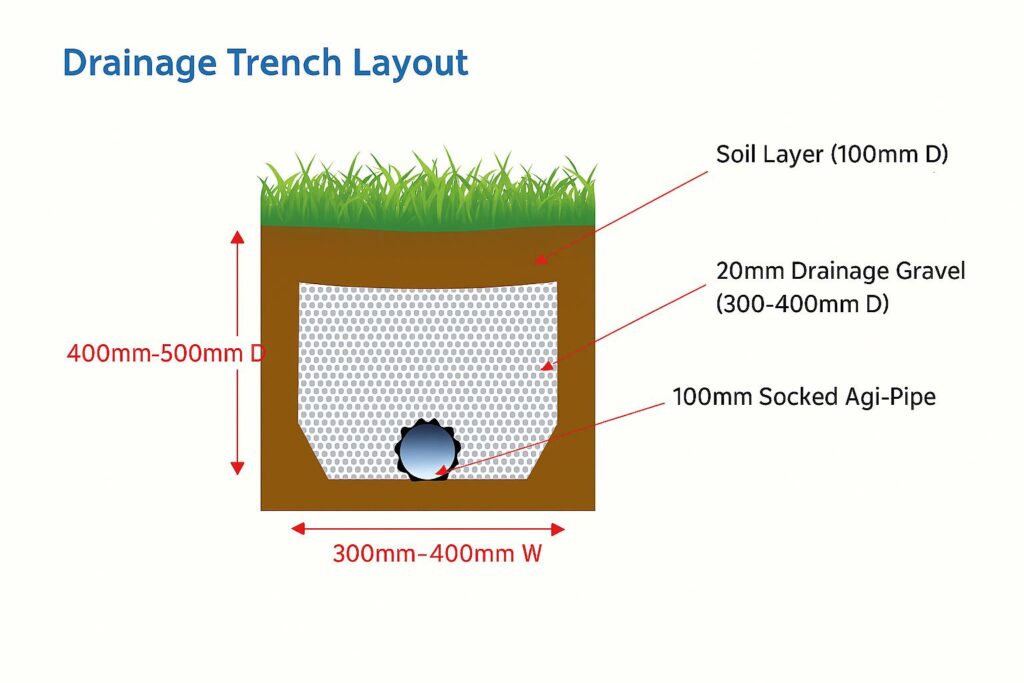
Spoon drains work by:
- Capturing surface runoff and groundwater before it reaches the retaining wall
- Redirecting excess water in a controlled direction
- Reducing pressure acting on the wall structure
When correctly designed and installed, spoon drains help:
- Minimise staining on sandstone walls
- Protect plants from waterlogging and nutrient loss
- Improve the long‑term performance and durability of retaining walls
While often considered an optional upgrade, drainage systems are one of the most effective ways to protect your landscape over time.
Planning for Performance, Not Just Appearance
Good drainage isn’t about over‑engineering — it’s about understanding how water behaves on your site.
By addressing drainage early, homeowners can:
- Maintain the appearance of their retaining walls
- Reduce ongoing maintenance
- Protect their landscaping investment
- Improve the structural performance of the wall
At Rycan Retaining and Earthworks, we assess each site’s soil and ground conditions to design drainage solutions that work with the environment — not against it.
If you’re considering a retaining wall or earthworks project, in the Brisbane West or Ipswich region and want advice tailored to your property, feel free to contact our team. We’re always happy to talk things through.